
Group Captive Insurance for Commercial Roofing Contractors
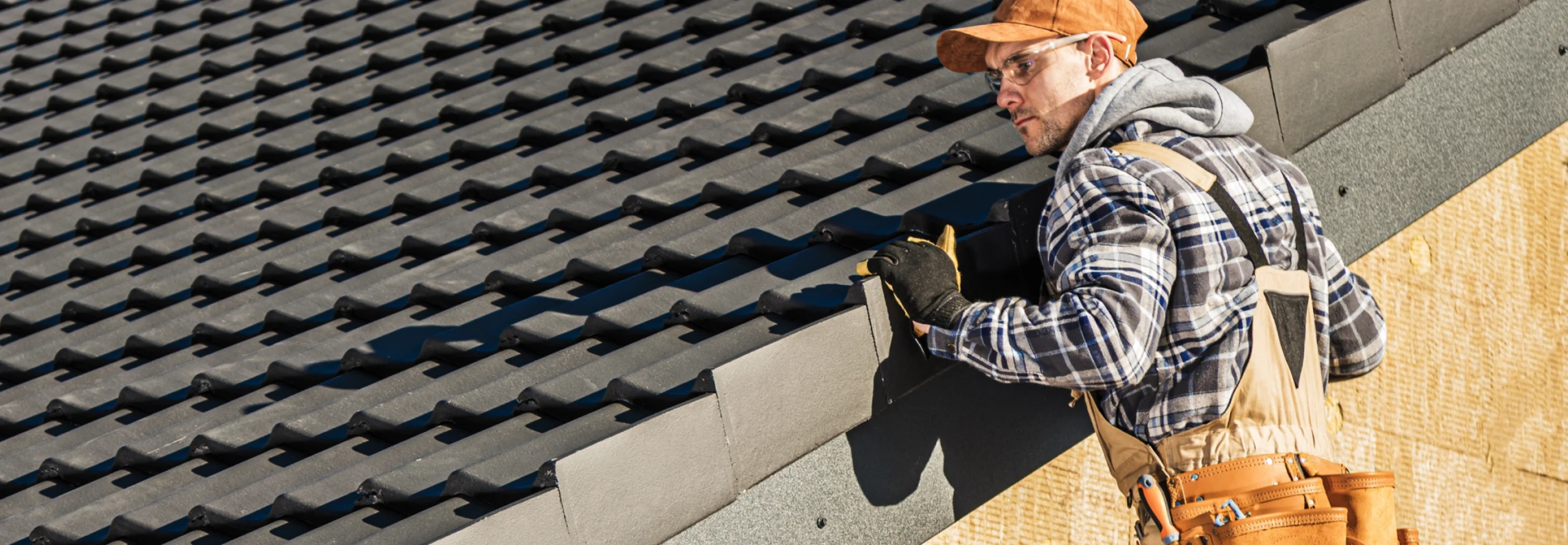
Commercial roofing carries some of the highest claims severity in construction, and traditional insurers price for that severity across the board, whether or not your crews are the ones causing it. Group captive insurance for commercial roofing contractors gives well-run roofing companies a way to separate their own performance from the industry average, so premiums reflect actual risk instead of a blended trade rate.
For a roofer that has invested in fall protection, crew training, and jobsite supervision, that distinction matters. Traditional carriers rarely reward safety investment with lower rates in real time. A group captive, a form of construction group captive insurance built specifically for operators like this, is designed to do exactly that.
What Is Group Captive Insurance for Commercial Roofing Contractors?
A member-owned group captive is an insurance structure owned by its members rather than a traditional carrier. Instead of paying a premium to an outside insurer and losing visibility into what happens after that, a roofing contractor becomes a member-owner alongside other established, safety-focused businesses. The group collectively funds a portion of its own risk, shares in claims outcomes, and can benefit financially when losses run lower than projected.
This is different from how most roofing companies buy insurance today. In a traditional policy, the carrier sets the price, absorbs the risk, and keeps whatever underwriting profit results from a good year. In a group captive, that dynamic shifts. Members retain a portion of the risk they used to hand off entirely, and in exchange, they gain more say in how claims are handled and more upside when performance is strong.
Claims performance is central to how this works. A roofing contractor with fewer, better-managed claims strengthens the group captive’s overall results, which can translate into unused loss funds and investment income coming back to members. A contractor with poor claims trends affects that same pool, which is part of why group captives are selective about who they bring in.
Why Are Commercial Roofing Contractors Considering Group Captive Insurance?
Roofing contractors are looking at group captive insurance for roofers because the traditional market has become expensive and unpredictable, often regardless of how a company performs. Rate increases tend to follow industry-wide loss trends rather than an individual contractor’s own claims history, so a roofer with a clean safety record can still get hit with a renewal increase because other roofing companies had a bad year. Rising roofing insurance costs driven by market-wide trends, not company-specific performance, are the single biggest complaint we hear from contractors before they look at a group captive.
Fall-related injuries and workers’ compensation claims are a major driver of that volatility. Roofing work happens at height, often on compressed schedules and in shifting weather, and the severity of a single serious claim can be enough to move an entire book of business. That means even contractors with strong safety programs can find themselves subsidizing less disciplined operators in the standard market.
The frustration usually comes down to one thing: a contractor does the work to bring claims down, and the traditional market doesn’t consistently reflect that back in pricing. A group captive is built around the idea that safety performance and cost should be connected.
What Risks Do Commercial Roofing Contractors Need to Manage?
The risks a roofing contractor manages day-to-day are the same ones a captive underwriter will look at closely before extending membership.
Fall Protection and Work-at-Height Exposure
This is the single biggest driver of severity in roofing claims, and it's where documented protocols matter most. Underwriters want to see fall protection as an enforced practice, not just a written policy.
Weather, Subcontractor, and Workers' Compensation Risk
Roofing crews work in conditions that shift quickly, and weather-related incidents are a recurring source of claims in the trade. Many roofing jobs also involve subcontracted labor, and their safety practices can affect the general contractor's own risk profile. Because of the physical nature of the work, roofing workers' compensation is often the largest single cost driver in a roofing contractor's insurance program.
Crew Training and Jobsite Safety
Consistent onboarding, ongoing safety training, and active supervision reduce the frequency of incidents before they happen. Jobsite safety culture is one of the clearest signals of how a contractor will perform inside a group captive.
How Does Group Captive Insurance Work for Commercial Roofing Contractors?
The process starts with a detailed look at the numbers, not a sales pitch, and moves through three stages before a contractor joins.
Step 1: Review Premiums, Claims, and Loss History
KT Captive Insurance Advisors reviews a roofing contractor’s premium history, claims and loss data, and payroll, and how those figures have trended over recent years. That review shows whether a company’s own performance supports a different pricing approach than what the traditional market is offering.
Step 2: Evaluate Safety Programs and Operational Risk
The evaluation moves into safety programs and day-to-day operations: how fall protection is enforced, how crews are trained and supervised, and how the company responds when something does go wrong. This isn’t a checklist exercise. It’s meant to answer a practical question: is this a contractor whose claims outcomes are shaped by discipline or by chance?
Step 3: Structure Risk Retention and Risk Sharing
If the fit looks right, the contractor moves into a structure built around risk retention and risk sharing. Coverage runs through KT’s casualty program, which brings together workers’ compensation, general liability, and commercial auto under a single group captive structure rather than treating them as separate policies bought from separate places. The contractor retains a portion of its own risk, shares in the pooled risk of the broader membership, and the group captive’s overall performance, driven by how well its members manage claims, determines how much comes back to members over time.
Curious what your numbers would look like inside a group captive? Schedule a no-pressure conversation with KT Captive Insurance Advisors, and we’ll walk through your premiums, claims, and safety record together.
What Are the Benefits of Group Captive Insurance for Roofing Contractors?
The core benefit is control. A roofing contractor in a group captive has more say over how claims are handled, more transparency into where premium dollars go, and a direct line between safety performance and financial outcome. That’s a meaningfully different relationship than the one most roofing companies have with a traditional carrier.
Beyond control, there are two other advantages worth calling out:
A stronger connection between safety and cost:
When claims run low, that performance shows up in group captive results instead of disappearing into a carrier's broader book of business.
A stronger connection between safety and cost:
Unused loss funds and investment income generated by the group captive can be returned to members, something that doesn't happen under a traditional guaranteed-cost policy.
None of this makes the coverage automatically cheaper. It makes cost more directly tied to how the contractor performs, which is the tradeoff well-run roofing companies are usually looking for.
How Can Roofing Contractors Reduce Claims and Improve Group Captive Performance?
Contractors who see the strongest results inside a group captive tend to treat claims reduction as an ongoing operational priority, not a once-a-year renewal conversation.
Fall protection and crew training programs are the starting point. Regular refreshers, clear enforcement, and documentation matter as much as having a program on paper in the first place. Jobsite inspections and active supervision catch problems before they become claims, especially on multi-crew or multi-site operations where oversight can otherwise get thin.
It also helps to study claims patterns rather than just closing them out. Looking at where incidents cluster, whether that’s a specific type of job, a specific crew, or a specific time of year, gives a contractor something concrete to act on. Strong return-to-work processes matter too, since how quickly and how well an injured worker is brought back can significantly affect claims severity and cost.
Which Commercial Roofing Contractors Are Best Suited for a Group Captive?
Group captives work best for roofing contractors that are financially established, operationally mature, and already investing in safety as a core part of how they run the business, not as a compliance formality.
That generally means a company with a stable, multi-year track record, a documented safety culture with real fall-protection and training programs behind it, and a loss history that’s manageable even if it isn’t perfect. It also means a willingness to take a longer view. Group captives reward performance over time, so contractors looking for a quick discount rather than a long-term roofing risk management strategy aren’t the right fit.
As a general benchmark, roofing and other high-risk construction operations tend to qualify with a smaller workforce than lower-risk industries, since combined casualty premiums, not headcount alone, are what determine eligibility.
What Should Roofing Contractors Consider Before Joining a Group Captive?
A group captive is a real commitment, and it’s worth weighing honestly before moving forward.
Members take on capital and risk-retention requirements that don’t exist in a traditional guaranteed-cost policy. That means a portion of the company’s own funds is tied to the group’s performance, which is exactly what creates the upside, but it also means poor claims performance, whether the contractor’s own or the broader membership’s, has a real financial impact. Joining a group captive is also a longer-term decision than a standard annual policy. It works best for contractors ready to manage risk actively over several years, not ones looking for a one-year fix, and it comes with real management responsibility, not just a premium payment.
How Does Group Captive Insurance Compare With Traditional Roofing Insurance?
The differences come down to who holds the risk and who benefits when performance is strong. Here’s how the two models stack up side by side.
|
Factor
|
Traditional Insurance
|
Group Captive
|
|---|---|---|
|
Cost control
|
Set by carrier, tied to industry averages
|
Tied to the contractor's own performance
|
|
Claims involvement
|
Limited visibility into claims handling
|
Direct input into claims strategy
|
|
Risk retention
|
Fully transferred to the carrier
|
Shared between the contractor and the group captive
|
|
Safety incentives
|
Rarely reflected in real-time pricing
|
Directly connected to financial outcomes
|
|
Financial participation
|
None; carrier retains underwriting profit
|
Members can benefit from unused loss funds and investment income
|
|
Long-term commitment
|
Renewed annually, market-dependent
|
Structured as a longer-term risk strategy
|
How Can a Group Captive Support a Growing Commercial Roofing Company?
As a roofing contractor takes on larger projects or moves into new markets, insurance needs to keep pace without becoming a bottleneck. A group captive structure is built to scale with the business, since underwriting is based on the contractor’s own data and trends rather than a fixed policy that has to be renegotiated every time the operation changes size or scope.
Growth also usually means scaling crews and safety programs at the same time, which is exactly the kind of operational maturity group captive membership rewards. Over time, that combination, a growing roofing business with a group captive-backed insurance strategy, tends to produce more predictable long-term insurance planning than staying on the standard market renewal cycle. For contractors weighing alternative risk financing for roofing contractors more broadly, this scalability is often the deciding factor over a traditional policy.

Why Choose KT Captive Insurance Advisors for Commercial Roofing Group Captives?
Firsthand Construction Experience
Co-founder Braden Black has run his own mid-market business inside a group captive for more than a decade, so the guidance comes from lived member experience, not a product manual.
Direct Workers' Compensation Involvement
That background includes hands-on experience managing workers’ compensation exposure, not just advising on it from the outside.
Active Group Captive Participation
Braden has operated as an active group captive member-owner himself, giving him a direct stake in understanding how group captive performance plays out over time.
Evaluation Grounded in Real Numbers
Every evaluation is based on actual claims history, actual premiums, and actual risk profile, not assumptions based on industry labels.
Ready to find out if your roofing business qualifies?
Schedule a no-pressure conversation with KT Captive Insurance Advisors. We’ll walk through your premiums, claims history, and safety programs and give you a straight answer on whether a group captive makes sense for your business.
Group Captive Insurance for Roofing Contractors FAQs
Strong fall-protection programs reduce the frequency and severity of claims, which directly improves a group captive’s overall results and a member’s potential return.
It can, over time, by tying costs more directly to your claims performance rather than industry-wide pricing trends.
Higher claims affect both the contractor’s retained risk and the group captive’s broader performance, which is why ongoing risk management matters after joining.
Qualification is based on your combined casualty premiums, claims history, and safety practices. Reviewing your numbers is the fastest way to find out.
Generally, yes. Combined casualty premiums, covering workers’ compensation, general liability, and commercial auto, are one of the main qualification factors.
A stable, manageable loss history supports eligibility. Chronic or unresolved claims patterns are a bigger concern than a single past incident.
Yes. Group captive structures are designed to scale with a member’s business rather than requiring a new policy each time operations expand.
Yes. Documented OSHA compliance, especially around fall protection, is one of the clearest signals underwriters look for during evaluation.
Unused loss funds, combined with investment income, can be returned to members when the group captive’s overall claims performance runs better than projected.
Yes. Subcontractor safety practices and claims history can influence the general contractor’s own risk profile within the group captive.
Yes. Group captives are built to work across state lines, and multi-state roofing operations are common among group captive members.
No. The group captive covers casualty risk, specifically workers’ compensation, general liability, and commercial auto, not every exposure a roofing business carries.
Claims are handled with direct member input rather than being managed solely by an outside carrier, giving contractors more say in strategy and resolution.
Group captives work best as a multi-year commitment. Short-term participation limits the financial benefit that comes from sustained strong performance.
Ready to See if a Group Captive Is Right for Your Roofing Business?
If your safety record isn’t showing up in your premiums, it’s worth a direct look at your numbers.