
Group Captive Insurance for Crane & Rigging Contractors
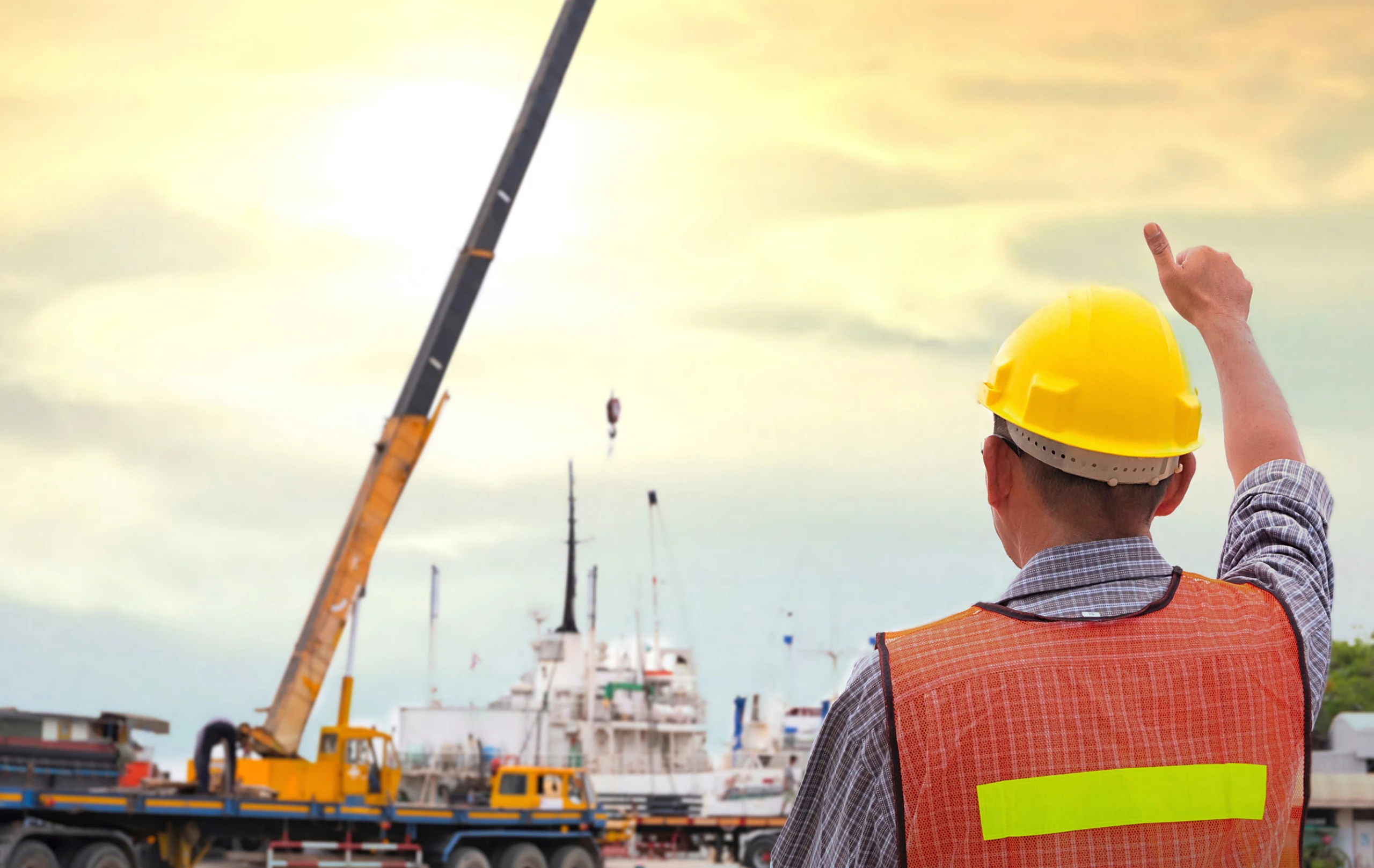
Crane and rigging contractors operate in one of construction’s most specialized risk environments, where heavy lifts, complex load movements, equipment condition, operator competency, and coordination with other trades can turn a single incident into a severe loss. Few construction segments carry this much consequence riding on a single operation going right.
Group captive insurance exists for operators who take that seriously. It’s a structure built to reward the kind of lift planning and safety discipline that standard insurance rarely prices with any precision.
What Is Group Captive Insurance for Crane & Rigging Contractors?
Picture a member-owned group captive as a group of qualifying businesses pooling ownership of their own insurance program instead of buying coverage from an outside carrier. Crane and rigging contractors that join hold onto a defined share of their own risk, and how well they manage safety and claims feeds directly into what the group captive returns to its members. For a broader look at how the structure works, visit our Group Captive Insurance page.
Why Are Crane & Rigging Contractors Turning to Group Captive Insurance?
Premiums in this industry run high largely because of how severe a lifting incident can be perceived to be, regardless of an individual contractor’s own track record. Standard underwriting doesn’t consistently give credit to operators who’ve built out engineered lift plans and formal safety controls, so sophisticated risk management can go unrewarded in the pricing.
Coverage itself can tighten after a run of severe losses elsewhere in the industry, leaving disciplined operators facing the same restrictions as everyone else. Market-wide loss events compound the problem further: a handful of severe incidents outside a contractor’s own operation can shift terms for every crane operator, disciplined or not, which leaves well-run companies absorbing costs that have nothing to do with how they run their business.
Claims transparency adds another layer of frustration. Many contractors have limited insight into how their own claims get handled once filed, making it hard to trust that the process reflects their own performance rather than the industry’s.
What Risks Do Crane & Rigging Contractors Need to Manage?
This industry’s risk profile centers on a smaller number of exposures that carry outsized consequences when something goes wrong.
Fleet, equipment transportation, and mobile operations:
Moving cranes and rigging equipment between sites introduces its own auto and logistics exposure.
Jobsite coordination, property damage, and third-party exposure:
Lifting operations often happen near other crews, structures, and the public, adding liability layers beyond the lift itself.
Operator, rigger, and ground-crew injuries:
People working in close proximity to suspended loads face a level of physical risk unique to this trade.
Heavy lifts, load handling, and equipment-related incidents:
These are low-frequency events, but the severity when they occur sets crane work apart from most construction risk.
How Does Group Captive Insurance Work for Crane & Rigging Contractors?
The evaluation moves through four stages before a contractor is accepted.
Step 1: Review Historical Premiums, Claims, and Loss Performance
KT Captive Insurance Advisors starts with a contractor’s premium history, claims data, and loss performance to see how the numbers have moved over recent years.
Step 2: Evaluate Equipment, Workforce, and Operational Exposures
From there, the review turns to equipment, workforce, project types, and how daily operations line up against the claims already on record.
Step 3: Assess Lift Planning, Training, and Safety Procedures
Lift planning, operator training, inspection routines, and safety procedures get close attention here, since these are the factors that separate a contractor whose safety record is earned from one that’s just been lucky.
Step 4: Structure Retained and Shared Risk
If the fit works, the contractor moves into a structure built around defined risk retention and sharing, with outcomes tied to how the group captive performs as a whole.
Curious what your numbers would show? Bring your premiums, claims, and safety programs to KT Captive Insurance Advisors for a no-pressure look and a straight answer.
What Are the Benefits of Group Captive Insurance for Crane Contractors?
The upside here is straightforward: a real say in how claims get resolved, clear visibility into what premium dollars fund, and a much tighter tie between how safely a company operates and what it pays than a conventional policy ever offers.
Safety and financial outcomes move together:
Well-executed lift plans and disciplined operations tend to shape a group captive's results more directly than they would under a standard carrier's pricing model.
A cushion against rough insurance cycles:
When the broader crane and rigging market takes a hit after an industry-wide bad year, group captive members feel it less sharply than companies on standard policies.
A shot at favorable underwriting and investment returns:
If the group captive performs well, unused premium and investment income may find their way back to members.
None of this is a promise. What comes back to members, if anything, depends entirely on how the group captive performs, not a number locked in at enrollment.
How Can Lift Planning & Safety Improve Group Captive Performance?
Few things move the needle on group captive performance in this industry as much as how seriously a contractor treats lift planning before the crane even arrives on site.
Engineered lift plans and pre-lift risk assessments catch problems on paper before they become problems in the air. Operator and rigger competency, backed by documented procedures rather than informal know-how, sets the baseline for how consistently a crew performs under pressure. When something does go wrong, post-incident reviews and claims analysis turn that event into a lesson the whole operation can apply, which is what continuous loss prevention is built on.
How Do Crane Inspections & Equipment Maintenance Affect Risk?
Equipment condition is one of the more controllable variables in an industry full of ones that aren’t, which makes inspection and maintenance programs worth their own attention.
Routine crane and lifting-equipment inspections catch mechanical wear before it becomes a failure mid-lift. Preventive maintenance, done on a schedule rather than in response to a breakdown, keeps that risk contained. Documentation matters just as much as the maintenance itself, since a program that isn’t recorded is hard to distinguish from one that isn’t happening.
How Do High-Severity Claims Affect Crane & Rigging Group Captive Performance?
A single severe lifting incident can shift a group captive’s loss performance more than months of otherwise clean operations, which is worth understanding going in.
That’s part of why incident investigation and disciplined claims management matter so much here. Getting a clear, honest account of what happened and why gives a contractor something real to act on, and strong loss controls built from that insight are what bring claim frequency and severity down over time rather than leaving it to chance.
How Does Jobsite Coordination Affect Crane & Rigging Risk?
Lifting operations rarely happen in isolation, and coordinating with the crews around them is its own distinct risk factor.
Crane crews, riggers, and other trades working the same site need a shared understanding of who’s responsible for what while a lift is underway. Clear communication and defined supervision roles keep people and equipment out of each other’s way during the moments that matter most, when a load is moving.
Which Crane & Rigging Contractors Can Benefit From a Group Captive?
Group captive insurance can be a fit for commercial crane contractors, heavy-lift contractors, rigging contractors, industrial crane and rigging companies, crane rental companies with operators, and other specialized lifting contractors.
Falling into one of these categories doesn’t guarantee a fit on its own. Eligibility still comes down to the specific group captive’s appetite and each company’s individual risk profile.

Is Your Crane & Rigging Company a Good Candidate for a Group Captive?
Strong candidates tend to share a common thread: engineered lift planning backed by documented safety procedures, qualified operators and riggers working under experienced supervision, disciplined equipment maintenance and inspection programs, and a manageable loss history paired with genuine commitment to risk management over the long haul.
What Should Crane Contractors Consider Before Joining a Group Captive?
Given how severe a single lifting incident can be, this is a decision worth weighing with open eyes rather than rushing into.
Joining means taking on capital and risk-retention responsibilities a guaranteed-cost policy never asks for, so a large or severe claim carries real financial weight for the member, not just an abstract risk. It’s also a commitment measured in years, not one renewal cycle, and staying in good standing depends on keeping safety and loss-control practices strong well after the paperwork is signed.

How Does Group Captive Insurance Compare With Traditional Crane Contractor Insurance?
Set side by side, the two models pull in different directions on nearly every factor that matters.
|
Factor
|
Traditional Workers' Compensation
|
Workers' Compensation Group Captive
|
|---|---|---|
|
Risk
|
Primarily transferred
|
Defined portions retained and shared
|
|
Pricing
|
Influenced by broader market
|
More connected to group captive and member performance
|
|
Claims
|
Primarily carrier-managed
|
Greater member involvement
|
|
Lift planning
|
An underwriting consideration
|
An important loss-control factor
|
|
Safety
|
Influences underwriting
|
Central to group captive performance
|
|
Loss performance
|
Affects renewal
|
Can directly affect group captive outcomes
|
|
Underwriting results
|
Carrier retains
|
Members may participate
|
|
Strategy
|
Annual renewal cycle
|
Long-term risk strategy
|
How Can Group Captive Insurance Support a Growing Crane & Rigging Company?
Adding cranes, specialized equipment, and trained crews changes a company’s risk profile as much as its revenue, and a group captive structure is meant to flex with that rather than lag behind it.
Taking on larger or more technically demanding lifting projects fits into the same evaluation framework, since underwriting is grounded in the company’s real operational data rather than a static policy written for a smaller version of the business. Expanding into new markets works the same way, with safety and claims controls scaling alongside the equipment and crews rather than getting left behind.

Why Choose KT Captive Insurance Advisors for Crane & Rigging Contractors?
An Eye for High-Severity Risk Built on Real Construction Experience
Braden Black’s roots are in construction, which shapes how KT reads high-severity, high-consequence exposures like the ones crane and rigging work carries every day.
Casualty and Workers' Compensation Expertise That Comes From the Field
Evaluating workers’ compensation and casualty risk isn’t an academic exercise for this team; it draws on genuine operational experience managing that exposure firsthand.
Ten-Plus Years Living Inside a Group Captive as Owners
Braden has spent over a decade as a group captive member-owner himself, running KT Black, the mid-market staffing company he co-owns with Kristi Black, through the same kind of structure he now advises on.
Recommendations Rooted in Your Own Claims, Premiums, and Operations
Nothing gets recommended based on what crane companies “usually” need. Every evaluation starts with a contractor’s real claims, premiums, operations, and risk profile.
Every Crane and Rigging Operation Is Different
The only way to know where yours stands is to look at the numbers. Reach out to KT Captive Insurance Advisors for a no-pressure conversation about your premiums, claims, and safety programs.
Crane & Rigging Contractors FAQ
Yes, provided their safety programs and claims history support it. Crane operators are evaluated on the same basis as other high-severity construction segments.
Yes. Rigging contractors qualify based on the same criteria as crane operators: premiums, claims history, and safety performance.
Yes, if their lift planning and safety programs align with the group captive’s underwriting appetite for high-severity lifting work.
Often, yes. A single large claim isn’t automatically disqualifying. Underwriters look at overall patterns and corrective action rather than one incident alone.
Loss history is weighed on a gradient, not a pass/fail basis. A stable, well-managed trend carries more weight than any single data point.
Crane accidents affect both the contractor’s retained risk and the group captive’s broader performance, which is why lift-planning discipline matters throughout membership.
A single severe claim can shift the group captive’s loss performance meaningfully, which is why incident investigation and corrective action carry real weight after joining.
Yes. Documented, engineered lift plans are one of the clearest signals underwriters look for during evaluation.
Yes. Consistent, documented inspection and maintenance programs are closely reviewed as part of the evaluation.
Yes, though eligibility depends on how the rental is structured. Bare rental, where the customer supplies their own operator, carries a different risk profile than operated rental.
Yes. Operated rental brings direct liability for how the lift is performed, so operator training and supervision records carry extra weight in the evaluation.
Yes. Group captive structures are built to work across state lines, and multi-state operations are common among crane and rigging members.
Large claims are managed with direct member involvement rather than being left entirely to an outside carrier, though they still affect the group captive’s overall shared performance.
Fleet size is a factor, but maintenance discipline and safety practices carry more weight than the number of cranes alone.
Yes. These three coverages make up KT’s casualty program, brought together under a single group captive structure rather than sold as separate policies.
Yes. Group captive structures are designed to scale with a member’s business rather than requiring a new policy every time equipment or crews expand.
Is Your Safety Discipline Paying Off?
If disciplined lift planning isn’t translating into lower premiums, it’s worth a closer look at your numbers.